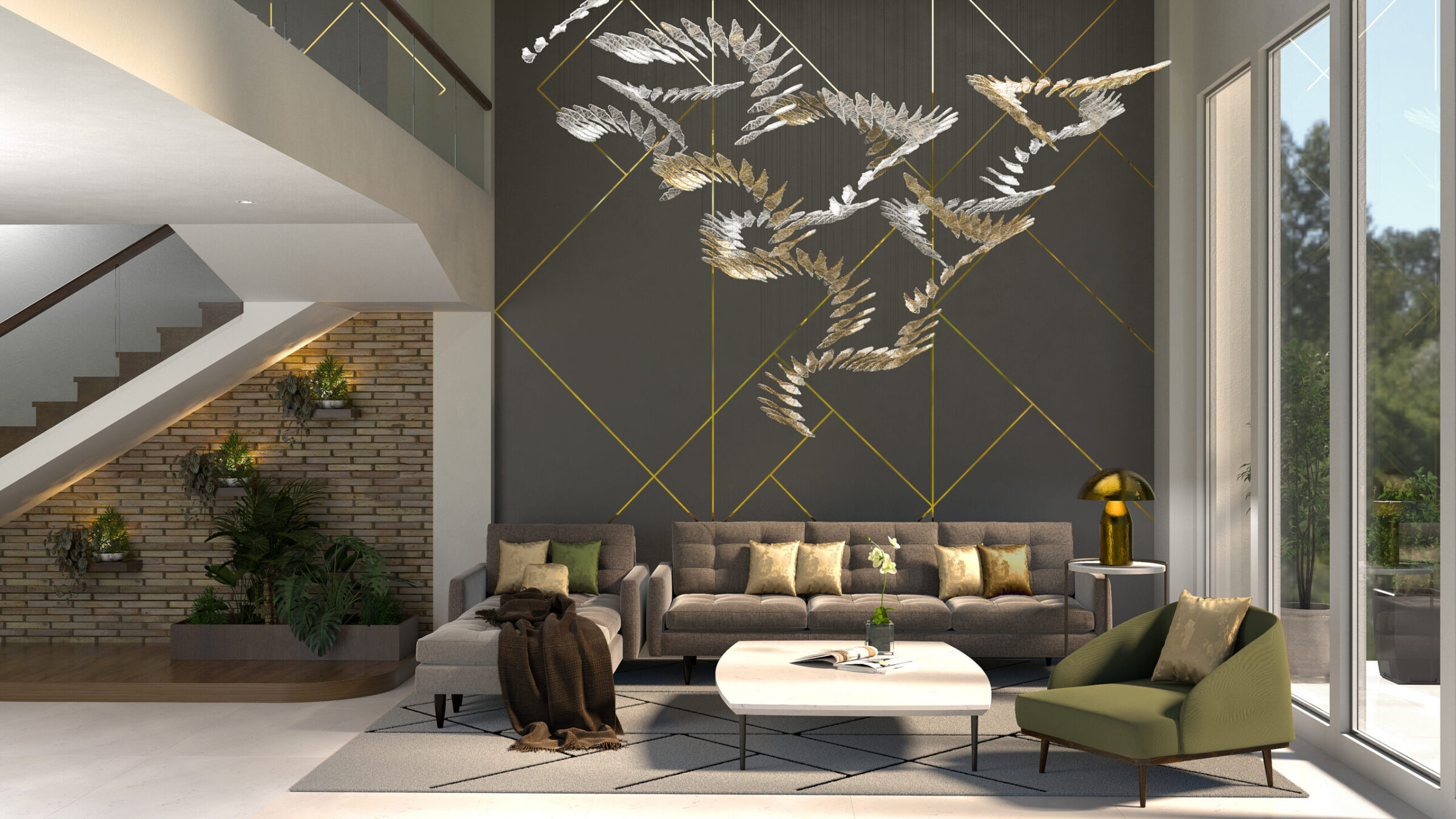
What actually separates a great crystal chandelier from an average one
Four things, in order of how much they matter: the crystal itself, the cut, the frame, and the fit to the room.
- The crystal. Genuine Bohemian crystal is lead or high-index barium glass with a high refractive index. It disperses white light into visible spectral color. Ordinary soda-lime glass does not, which is why cheap fixtures sparkle white instead of throwing rainbows.
- The cut. Hand-cutting produces facets with crisp arrises and slight variation between pieces. That variation is what makes a hand-cut chandelier look alive as you move past it. Molded crystal is uniform and reads flat.
- The frame. Brass and bronze frames hold plating and carry weight better than plated steel. Ask what the arms are made of, not just what color they are finished in.
- The fit. A superb fixture at the wrong scale is a mistake. Sizing rules are below, and they are worth following before you fall in love with a photograph.
Sizing: the rules designers actually use
- General rooms. Length (ft) + width (ft) = diameter (in). A 14 x 16 ft room wants roughly a 30 in fixture.
- Over a dining table. Fixture width = one-half to two-thirds of the table width. Hang the lowest element 30–36 in above the tabletop.
- Foyers and stairwells. Allow 2.5–3 in of fixture height per foot of ceiling height, and keep the bottom at least 7 ft above the floor. In a double-height entry, hang the piece so it is centered in the window when seen from outside.
- Bedrooms and bathrooms. Keep clearance above 7 ft, and place pendants over a tub or vanity rather than in the middle of the ceiling.
Budget bands
Crystal lighting is priced by the weight of crystal, the complexity of the cut, and the metalwork. As a planning guide: compact pendants and sconces sit in the low four figures; a dining or foyer chandelier typically lands in the mid four to low five figures; large multi-tier or bespoke hospitality installations run higher and are quoted per project. Because the Czech Republic is an EU member state, import treatment is often more favorable than for equivalent Asian production — Berkana passes that difference through rather than absorbing it as margin.
Lead times
A Berkana project typically completes in 6–12 weeks: 1–2 weeks of consultation, 2–3 weeks of design development and renderings, 4–8 weeks of artisan production in the Czech Republic, and 2–3 weeks for shipping and installation. Dates are confirmed at order placement, and stock held in the Miami warehouse shortens the tail end considerably.
Questions worth asking any supplier
Berkana answers all five the same way every time: hand-cut in the Czech Republic, solid metal frames, spares held for future replacement, door-to-door logistics with a Miami warehouse, and lead times confirmed the day the order is placed.
- Is the crystal hand-cut, and where is it cut?
- What is the frame material under the finish?
- Are spare crystal elements available years later?
- Who is responsible if a piece arrives damaged?
- What is the confirmed lead time, in writing, at order?
Common questions
The best crystal chandeliers are hand-cut Bohemian (Czech) crystal fixtures made by artisan workshops, because hand-cut lead crystal refracts light more sharply than molded or machine-cut glass. Berkana USA supplies handcrafted Czech crystal chandeliers to designers and boutique retailers across the United States, including fully custom commissions.
Add the room's length and width in feet; the sum in inches is a good starting diameter. For a 14 x 16 ft room that is roughly a 30 in fixture. Over a dining table, use one-half to two-thirds of the table width, and allow 30–36 in between the tabletop and the bottom of the fixture. In a foyer, allow 2.5–3 in of chandelier height per foot of ceiling height.
Handcrafted Czech crystal fixtures generally start in the low four figures for a compact pendant, sit in the mid four to low five figures for a dining or foyer chandelier, and rise from there for large custom or multi-tier installations. Because the Czech Republic is in the EU, tariff treatment is usually more favorable than for Asian imports.
Typical Berkana projects complete in 6–12 weeks: 1–2 weeks for consultation, 2–3 weeks for design development, 4–8 weeks for artisan production in the Czech Republic, and 2–3 weeks for shipping and installation.